
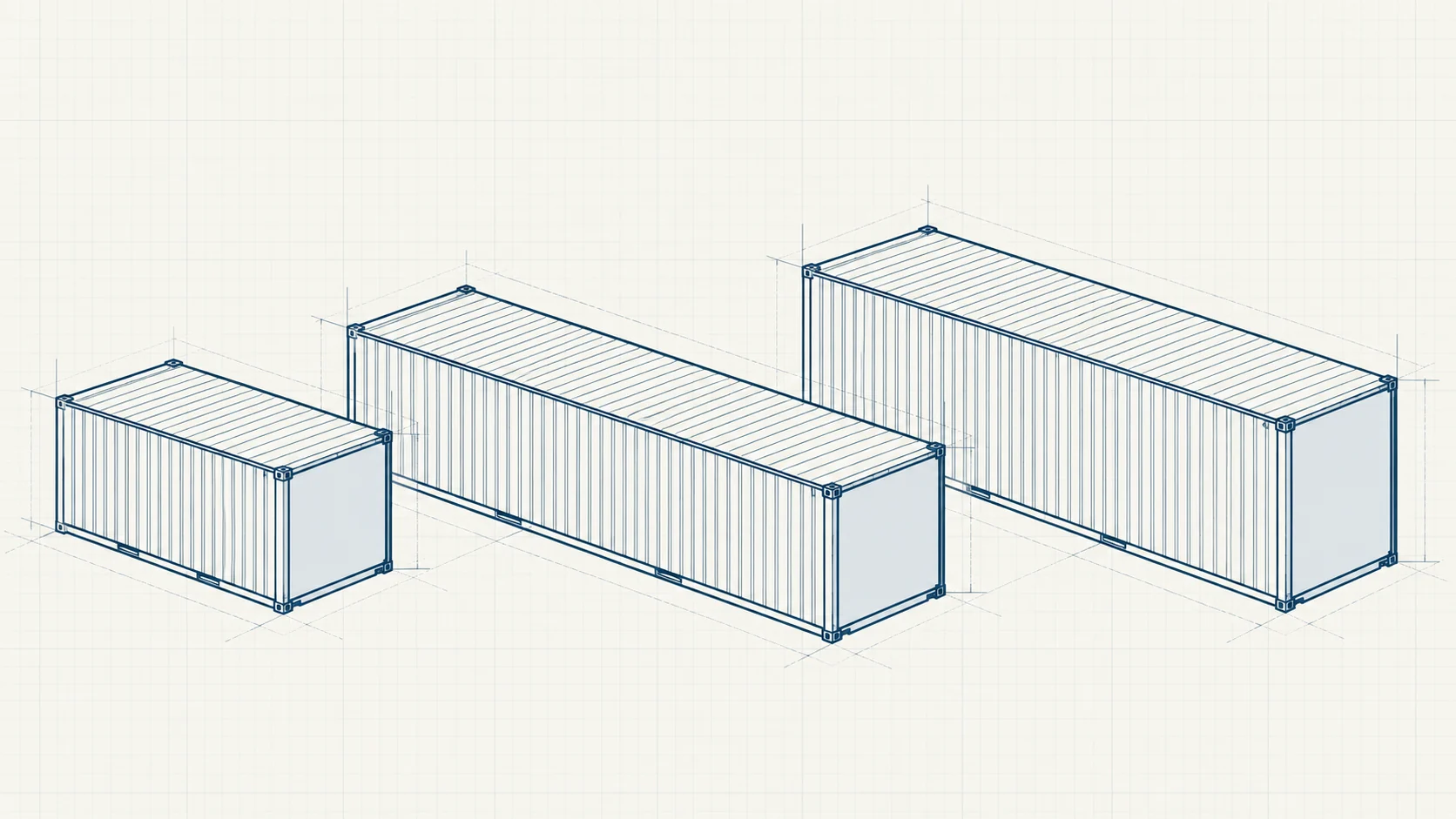
When a forwarder asks for 20GP, 40GP or 40HQ, translate each label into checkable data. A 20GP and 40GP are general-purpose dry containers at standard height. A 40HQ, also called 40HC, is a 40-foot high-cube container. The dimensions below are external dimensions; they do not state the usable cargo space inside a particular unit.
Quick comparison: standard external dimensions
| TYPE | EXTERNAL LENGTH × WIDTH × HEIGHT | FIRST DISTINCTION |
|---|---|---|
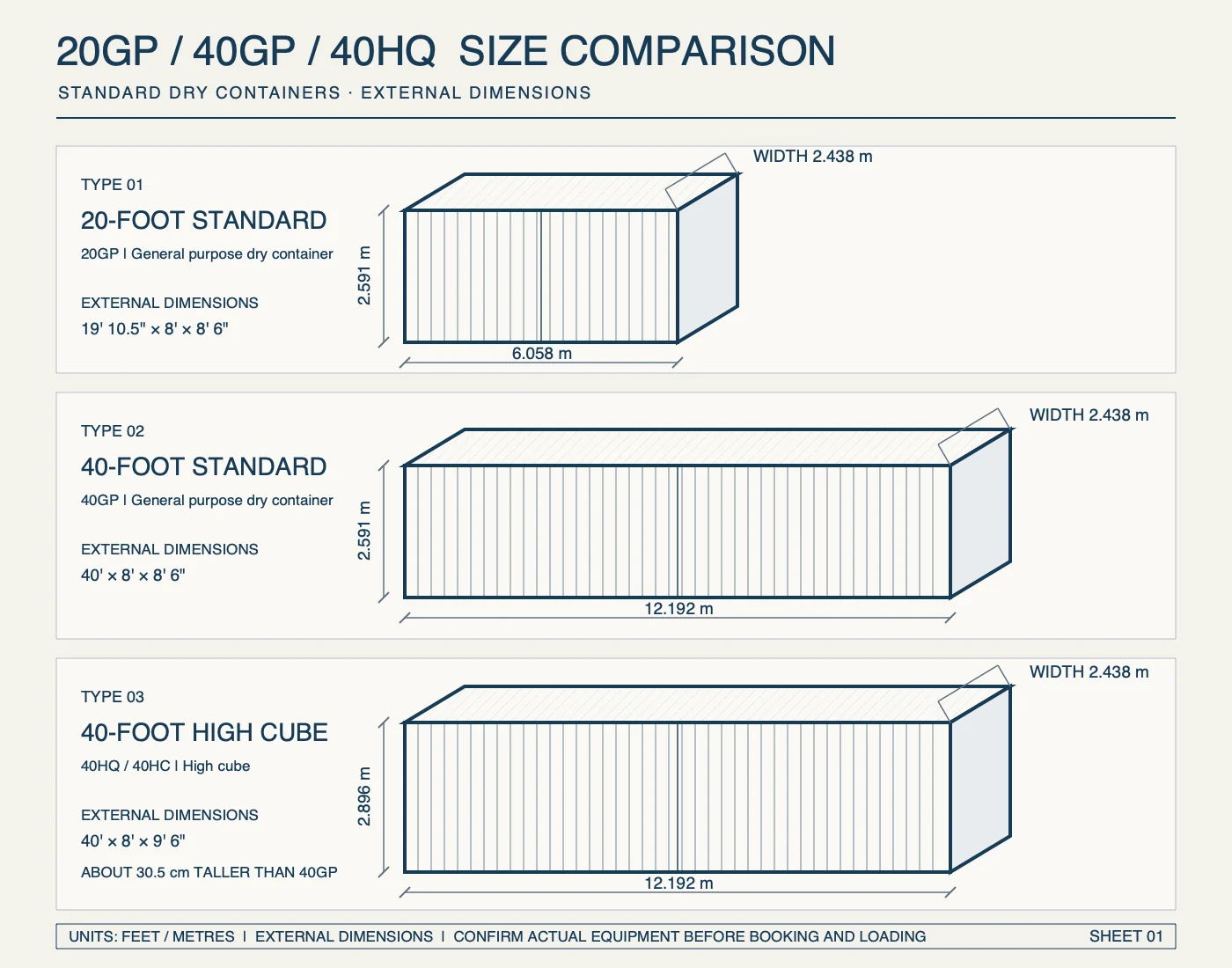
| 20GP | 6.058 × 2.438 × 2.591 m 19'10.5" × 8' × 8'6" | About half the length of a 40-foot container; weight still needs a separate check |
| 40GP | 12.192 × 2.438 × 2.591 m 40' × 8' × 8'6" | Same standard external height as 20GP |
| 40HQ / 40HC | 12.192 × 2.438 × 2.896 m 40' × 8' × 9'6" | Same length and width as 40GP, but 0.305 m taller outside |
20GP: shorter equipment does not remove the weight check
A 20GP has standard external dimensions of 6.058 × 2.438 × 2.591 metres. It can be an early candidate for a shorter or lower-volume shipment. Dense cargo may reach an equipment, road, vehicle or route weight limit before the visible space is full, so “small shipment” and “heavy cargo” are not automatic selection rules.
Give the forwarder and loading owner the packed dimensions, unit gross weight, quantity and pallet or base arrangement. Use the CBM and chargeable-weight guide to make the package data consistent before comparing options.
40GP: twice the nominal length, still standard height
A 40GP measures 12.192 × 2.438 × 2.591 metres outside. It is the same external width and height as a 20GP and roughly twice the external length. Do not treat one 40GP as a guaranteed sum of two 20GP loading results. Package orientation, voids, door access, weight distribution and inland transport conditions can change what works.
40HQ: 30.5 centimetres taller than 40GP
A 40HQ measures 12.192 × 2.438 × 2.896 metres outside. It has the same standard external length and width as 40GP and is 0.305 metres, or about 30.5 centimetres, taller. OOCL describes high-cube equipment as gaining one foot in height and as relevant to light, voluminous or bulky cargo.
The extra height does not guarantee another layer. Check the package height, pallet or base, stacking strength, loading orientation, door clearance and handling method.
Why outside dimensions cannot calculate the carton count
Walls, corner posts, flooring and the door frame consume space. Internal dimensions, door openings, tare and available payload also vary by carrier, owner, manufacturing series and individual equipment. ISO 668 classifies series 1 freight containers by external dimensions and refers more detailed internal and door requirements to the relevant equipment standards. For an actual shipment, use the carrier specification, booking confirmation and the container plate.
Before a loading calculation, record every packed unit's maximum external dimensions, quantity, unit and total gross weight, pallet or crate arrangement, allowed orientations, stacking and fragility restrictions, centre-of-gravity concerns, and dangerous-goods or special-declaration status. Connect these records to the freight booking handoff and export packaging checks.
Loading uses space and weight together
The UNECE CTU Code is a joint IMO, ILO and UNECE non-mandatory global code of practice. It treats loading, mass distribution and securing as cargo- and journey-specific work. General principles include keeping heavy cargo low, balancing weight longitudinally and transversely, using suitable pallets or bases, filling necessary voids, selecting appropriate securing, and keeping the door area safe so cargo is controlled when the doors open.
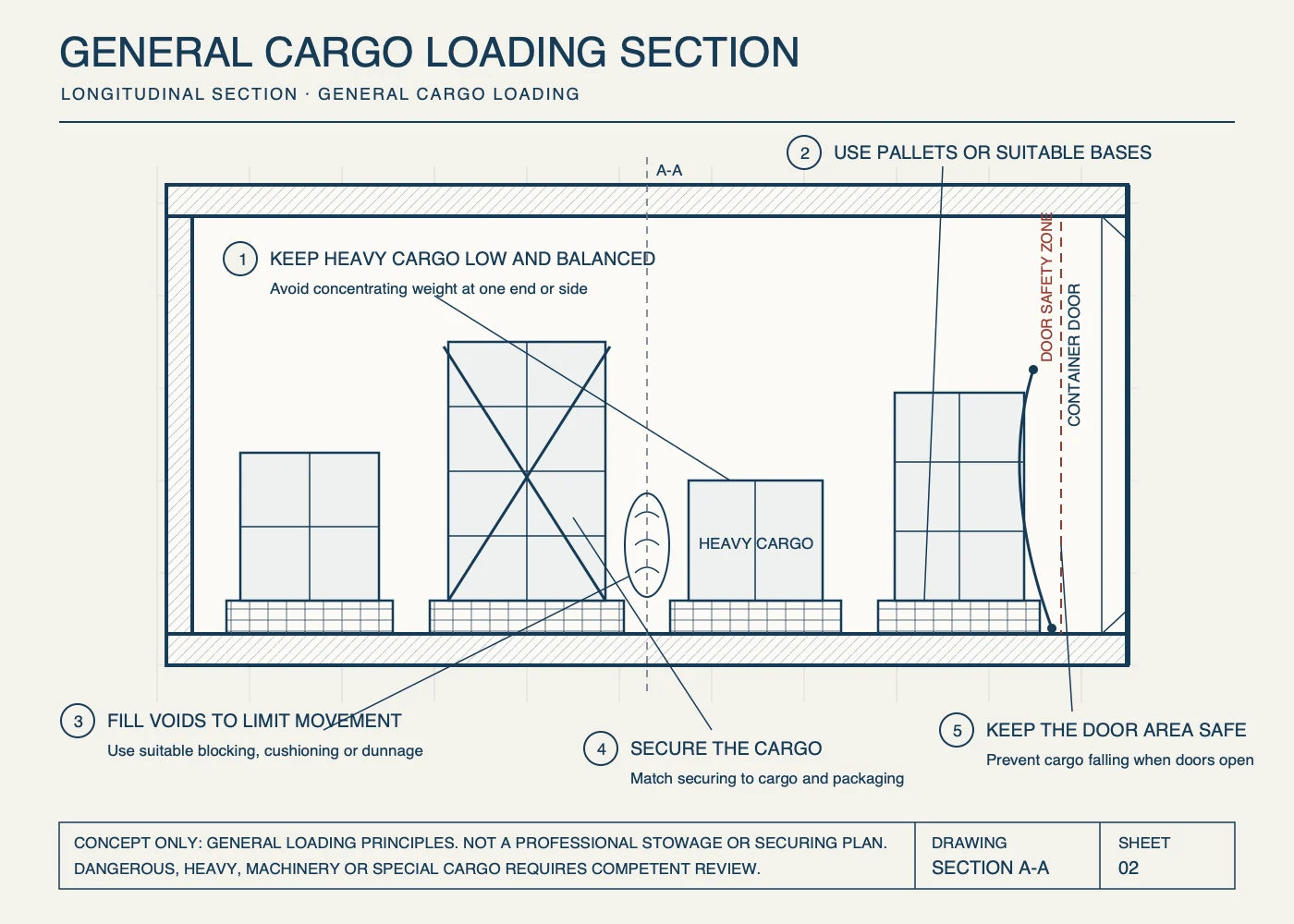
Loading photos can document visible conditions, but they do not prove that the securing method is adequate. For the evidence handoff, use the container loading inspection checklist.
A practical first-pass selection
- Dense cargo with less volume: assess 20GP, then verify total gross mass, container tare and payload, flooring and inland restrictions.
- More length and volume: assess 40GP and run the package layout again rather than multiplying a 20GP result.
- Light, bulky and stackable cargo: assess whether the extra height of 40HQ is actually usable.
- Long or tall individual pieces: check internal clearance and the door opening before focusing on total CBM.
- Machinery, overweight or out-of-gauge cargo: obtain a competent equipment and securing assessment.
These questions create a shortlist, not a booking conclusion. The actual cargo, packaging, route, equipment availability and safety conditions decide the final option.
Frequently asked questions
Is a 20GP exactly 20 feet long outside?
The trade name refers to the 20-foot class. Its standard external length is 6.058 metres, or 19 feet 10.5 inches. Confirm the actual equipment before use.
What is the size difference between 40GP and 40HQ?
They share the same standard external length and width. A 40HQ is 2.896 metres high, 0.305 metres or about 30.5 centimetres taller than a 40GP at 2.591 metres.
Can external dimensions tell me how many cartons will fit?
No. Internal and door dimensions, tare and payload vary, while pallets, orientation, securing and weight distribution affect the actual load.
Primary sources and boundaries
- ISO 668:2020 — the official entry for classification, external dimensions and ratings of series 1 freight containers.
- Maersk · Standard Equipment Information — the metric external-dimension table for 20-foot standard, 40-foot standard and 40-foot high-cube equipment.
- OOCL · General Purpose and High Cube — carrier equipment examples and the extra-foot description.
- UNECE · CTU Code — joint practice for packing, mass distribution and cargo securing.
Sources checked September 30, 2026. This guide compares standard external dimensions and provides a general preparation method. It does not publish a universal internal size, maximum payload, pallet count, carton count, price or saving. Confirm the actual booking and loading with the carrier, equipment data and competent responsible people.
Prepare a checkable request for your forwarder
Use the Export Toolkit to organize package dimensions, quantity, weight and orientation limits, then contact Chris about the handoff. Keep buyer and order-sensitive information out of public messages.