
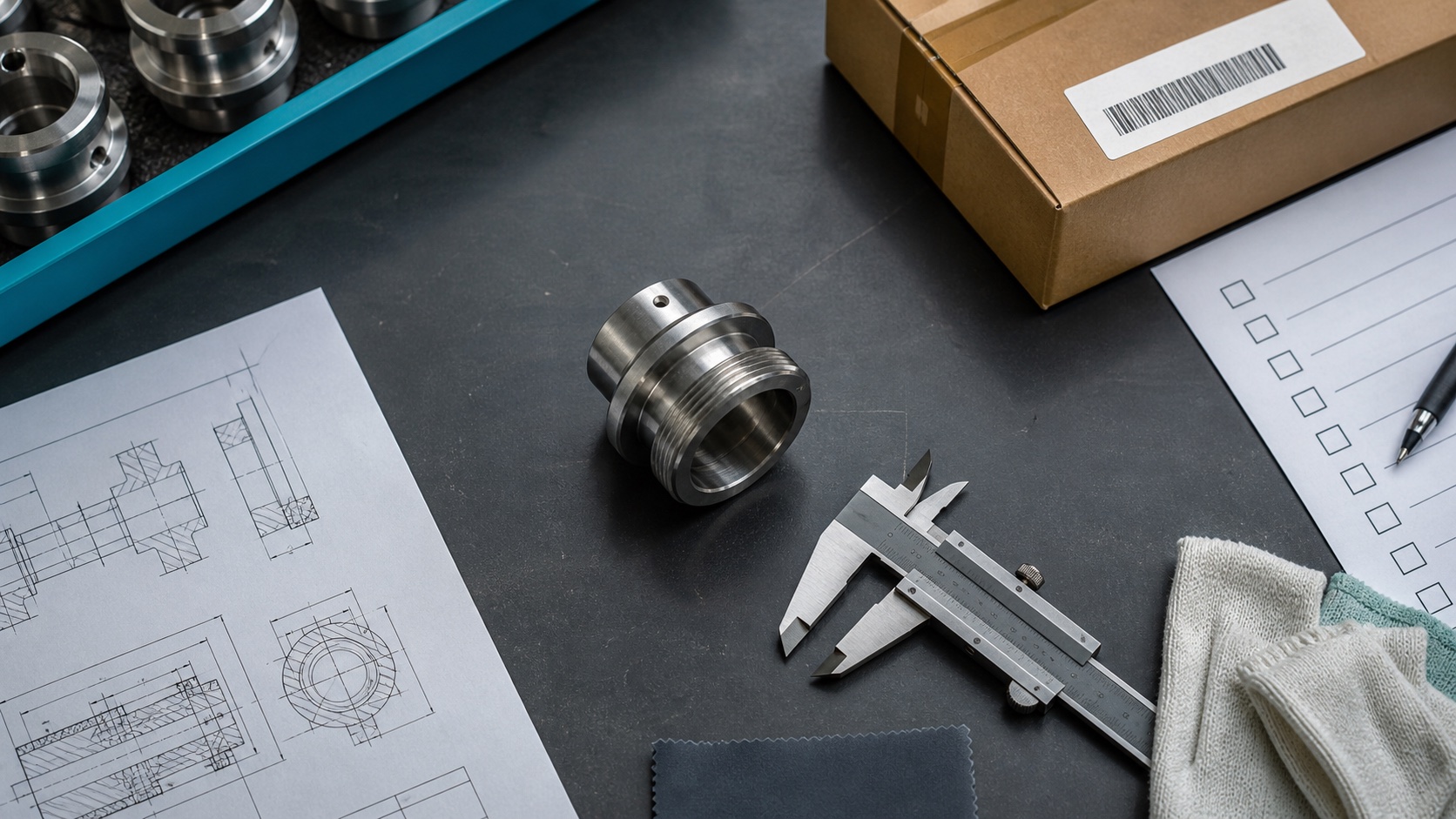
A factory audit and a pre-shipment inspection answer different questions. An audit evaluates the supplier, site and management systems. A PSI checks a defined production lot against the purchase order and inspection checklist before shipment.
Booking the wrong service can produce a detailed report that still does not support the decision you need to make.
Use a factory audit to assess supplier capability and controls. Use a pre-shipment inspection to test a specific order against requirements before release.
This guide covers the verification step after initial screening. For the full legal-entity, payment, capability, quotation and sample review, use the main guide to vet a Chinese supplier before your first order.
Factory audit vs pre-shipment inspection
| Check | Primary question | Typical evidence | What it cannot prove alone |
|---|---|---|---|
| Factory audit | Can this supplier and site control the required work? | Entity, site, processes, equipment, people, records and control systems | That a specific shipment is conforming |
| During-production inspection | Is production following the approved requirement early enough to correct? | Work in progress, process checks, dimensions, function and emerging defects | That the final packed lot will pass |
| Pre-shipment inspection | Does the available lot conform to the agreed order and checklist? | Sampled workmanship, quantity, dimensions, function, packaging, marking and witnessed tests | Zero defects or long-term supplier reliability |
| Loading supervision | Are the correct goods counted, handled and secured during loading? | Cartons, markings, container condition, count and loading process | Full product conformity when it was not separately inspected |
Factory-audit scopes may be technical, quality-system, social, environmental or customer-specific. A passing audit does not mean that every product or future shipment will conform. A passing sampled PSI does not mean that every unit was checked.
Choose the service from the decision you need to make
- Before supplier approval or a high-risk first order: consider a targeted factory audit.
- When defects become expensive to correct late in production: consider an initial or during-production inspection.
- Before final payment or shipment: consider a PSI against the approved specification.
- When loading and container handling are material risks: consider loading supervision as a separate scope.
Verification depth should increase with product complexity, order exposure, regulatory risk and the cost of failure. A lower-risk order may not require every service.
Define the inspection basis before requesting quotes
An inspector cannot resolve an unclear purchase specification. Before contacting inspection providers, prepare:
- purchase order, SKU list, quantities and factory location;
- current drawings, specifications and approved reference sample;
- critical dimensions, functions and on-site test methods;
- definitions and examples of critical, major and minor defects;
- packaging, barcode, label, marking and carton requirements;
- lot size, inspection level, sampling standard and agreed AQLs;
- report recipients, escalation contacts and release authority.
Do not rely on the supplier to present a few selected “inspection samples.” Independent random selection from the available production lot is part of the value of a third-party inspection.
What AQL sampling does—and does not—mean
ISO 2859-1:2026 defines AQL-indexed acceptance sampling schemes for lot-by-lot inspection by attributes. It uses inputs such as lot size, inspection level and AQL to determine sample sizes and acceptance or rejection thresholds.
Sampling is not a 100% inspection. A passing result does not prove zero defects, and an AQL number should not be described as a supplier’s permission to manufacture that percentage of defective goods. Safety-critical characteristics, regulatory checks and high-consequence functions may need separate rules, testing or full inspection.
Write the standard edition, inspection level, defect classes, AQLs and test methods into the inspection instruction. “Use the international standard” is not precise enough for a release decision.
When should a buyer book the inspection?
Work backwards from the planned shipment, but allow enough time to confirm production readiness, perform the visit, review the report, correct defects and arrange a re-inspection if necessary.
There is no universal lead time. It depends on location, product expertise, scope, travel, laboratory work and provider capacity. Provider-specific booking terms are not an industry-wide promise.
Ask the factory to confirm in writing:
- the total lot available for inspection;
- production and packing completion by SKU;
- the exact inspection address and contact;
- access to cartons, samples, equipment and records;
- whether production or packing will continue after inspection.
If the available lot is materially different from what was declared, record that limitation rather than treating the sample as representative of the full order.
How to select an inspection provider
Compare providers on their ability to perform the agreed work, not only the lowest quoted man-day rate.
- Product and test-method experience.
- Geographic coverage and realistic scheduling.
- Relevant accreditation, licensing or scheme approval where required.
- Inspector assignment and conflict-of-interest controls.
- Traceable photos, sample-selection records and stated limitations.
- Escalation when an unexpected issue appears.
- Laboratory access where on-site checks are insufficient.
- Re-inspection and cancellation terms.
Official provider information confirms that pricing can depend on service type, location and required man-days. Request comparable quotes against the same written scope; otherwise, two prices may not cover the same work.
How to read a PSI report
Do not stop at the Pass or Fail label. Review:
- the actual lot quantity and production status;
- how samples were selected across cartons, batches, colors and SKUs;
- defect photos, classification and counts;
- measurements, test conditions and equipment used;
- packaging, labeling and quantity findings;
- items not inspected, not available or only partially witnessed;
- any deviation from your instruction or approved sample.
The report is evidence from a defined time, sample and scope. It does not replace the buyer’s release authority or the supplier’s contractual responsibility.
What happens after a failed inspection?
First determine whether the problem is isolated or systematic. Then agree in writing on containment, sorting, rework, replacement, re-inspection, price adjustment or cancellation under the contract.
For any re-inspection, define what will be sampled and whether corrected units can be distinguished from untouched stock. A factory statement that “everything has been fixed” is not the same as verified corrective action.
Do not release a product with unresolved safety, regulatory or contractual issues merely to protect a sailing date. Escalate high-consequence decisions to the appropriate quality, engineering, compliance or legal specialist.
A buyer’s booking checklist
- State the decision: supplier approval, process verification, production check, final release or loading control.
- Identify the legal supplier, factory, order, lot and SKUs.
- Freeze specifications, reference samples and test methods.
- Define defect classes, sampling rules and release authority.
- Confirm production readiness and independent access to the lot.
- Compare providers using the same scope.
- Review the full report and record the release or corrective-action decision.
Frequently asked questions
Is a factory audit always required before buying from China?
No. Verification depth should match the product, order value, compliance exposure and cost of failure. Documents, product-specific evidence, samples, a live walkthrough and an independent PSI may be sufficient for a lower-risk order.
Does a passed PSI guarantee that the shipment has no defects?
No. A PSI is normally a sampled inspection performed at a defined time and scope. It supports a release decision but does not prove that every unit is defect-free.
Does AQL 2.5 mean that 2.5% defective goods are allowed?
Not as a simple lot-defect guarantee. AQL is an indexing parameter used with the lot size, inspection level and sampling plan to set sample and acceptance rules.
Who should choose and pay the inspection company?
There is no universal rule. The purchase agreement should state who selects and pays the provider, which checklist applies, who receives the report, who can authorize shipment and how re-inspection costs are handled.
How much does a pre-shipment inspection in China cost?
Providers may price by service type, location, product complexity and required man-days, with additional costs for travel, laboratory testing, urgent work or re-inspection. Request comparable quotes against the same written scope.
Source record
- ISO 2859-1:2026 — current AQL-indexed acceptance-sampling standard for lot-by-lot inspection by attributes.
- SGS — Pre-Shipment Inspection — quality, quantity, marking, packing, loading, documents and witnessed checks.
- SGS — Vendor Assessment and Technical Audit — supplier capability and regulatory-compliance assessment.
- QIMA — Product Inspections — inspection stages, independent sample selection, reporting and pricing factors.
- Bureau Veritas — Procurement services — vendor audit, technical assessment, inspection and expediting scope.
Sources were rechecked on 14 August 2026. Provider availability, pricing and booking terms can change. Confirm the current written scope and commercial terms before ordering a service.