
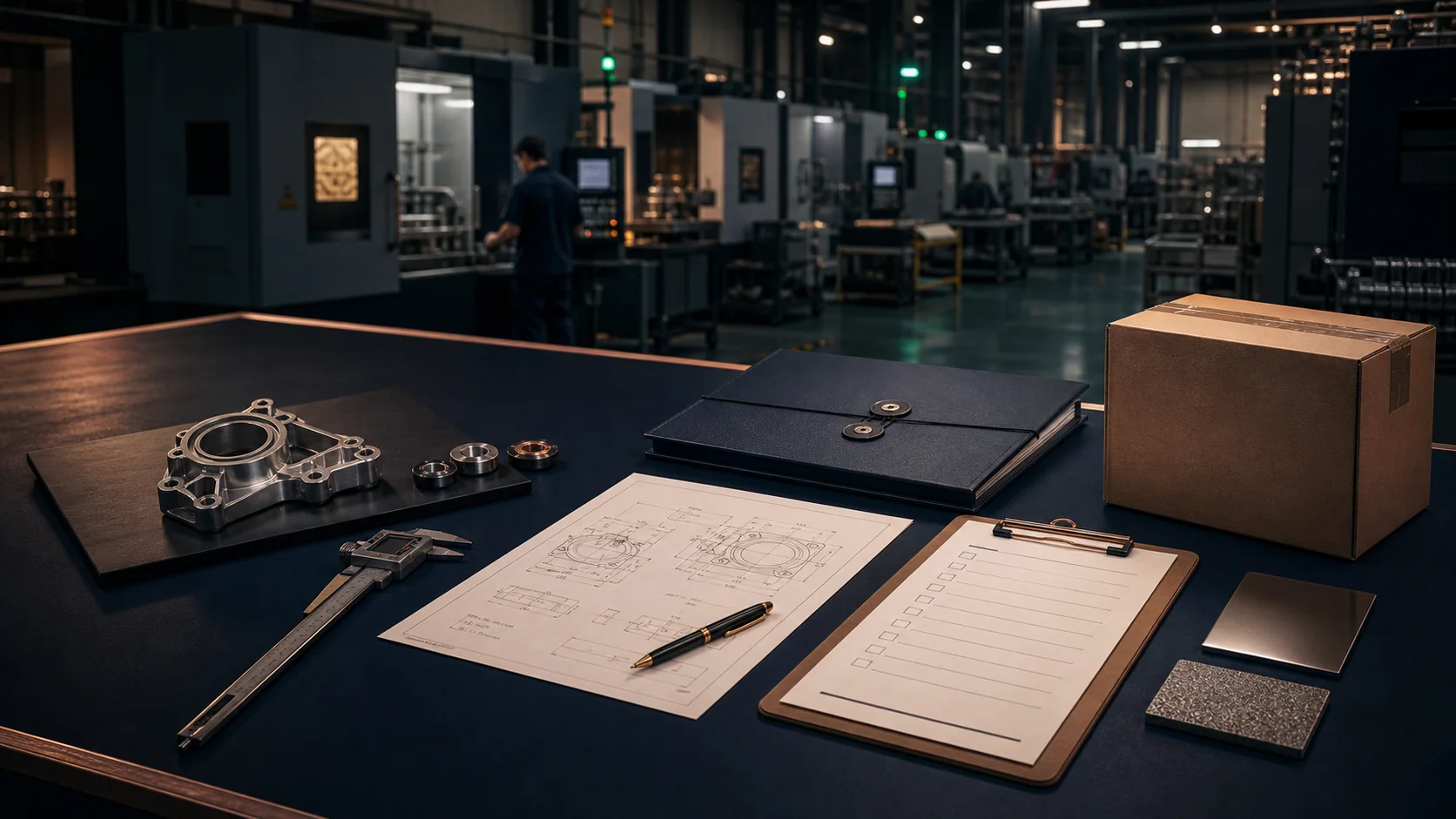
A China supplier evaluation is an evidence-led review of the legal company, payment path, manufacturing role, product capability, quotation, samples, quality controls and delivery risk before a buyer increases its order exposure. It does more than confirm that a company exists: it tests whether the supplier can consistently meet your specifications, quality standard, lead time, documentation needs, and communication expectations.
China supplier evaluation checklist at a glance
- Define the product, destination market and acceptance criteria.
- Match the legal company to the contract, invoice and bank account.
- Confirm who actually manufactures the product.
- Test product-specific capacity, processes and subcontracting.
- Compare the full quotation, not only the unit price.
- Turn the approved sample into a measurable quality standard.
- Choose document checks, video review, audit and inspection by risk.
- Record the approval decision and control payment and production exposure.
A polished website, a fast quotation, or a verified badge on a sourcing platform can be useful signals, but none of them is enough on its own. A reliable sourcing decision comes from checking several types of evidence and comparing what a supplier says with what it can actually demonstrate.
This checklist outlines a practical process for evaluating a supplier in China before you place a first production order. It can be used for an initial desktop review, a live factory call, or as the preparation layer for an on-site audit.
If the question is specifically what shipment history or public statistics can support, use the narrower guide on public trade data for sourcing and supplier claims. Then return to this checklist for the complete evaluation decision.
If you are still comparing manufacturing locations rather than a named company, first review China manufacturing competitiveness beyond low wages. Country-level context can shape the shortlist, but this page remains the complete process for evaluating the actual supplier.
When supplier evaluation services in China are useful
A buyer can complete part of a supplier evaluation directly. An independent or locally coordinated service becomes more useful when the legal entities are unclear, the product is technically complex, the destination market has compliance requirements, or the cost of a failed first order is high.
A well-scoped China supplier evaluation service should be built around the buyer's decision, not a generic factory score. Depending on the project, the work may include:
- Desktop screening of the legal company, payment path, business scope, and document consistency
- Product-specific review of processes, equipment, subcontracting, samples, and quality controls
- Preparation or coordination of a live factory review, audit, testing, or inspection
- A clear record of what was checked, the evidence reviewed, unresolved gaps, and the next recommended control
Not every supplier evaluation in China requires an on-site audit. The scope should match the order value, product risk, evidence already available, and the decision the buyer needs to make next.
What to request in a supplier evaluation report
Before commissioning supplier evaluation services in China, agree on a report that lets you trace each finding to evidence. A score without the scope, evidence and unresolved gaps is difficult to act on. Request these five fields:
- Scope: the legal entity, factory location, product, order stage and checks agreed with the buyer.
- Evidence: the document, sample, interview or observation behind each finding, with its date and reference.
- Limitations: which records, processes, subcontractors or product characteristics were not verified.
- Open actions: each unresolved issue, the person responsible and the evidence needed to close it.
- Decision: proceed, proceed only after stated conditions are met, or hold for further verification, with the buyer's approval recorded.
A desktop review, factory audit and shipment inspection answer different questions. Confirm which activities the agreed fee covers and who will perform them; a supplier evaluation report is not a guarantee of a future production lot.
1. Define the requirement before contacting suppliers
Supplier evaluation starts with a clear buying requirement. If the request is vague, quotations will be difficult to compare and important assumptions will remain hidden until sampling or production.
Your sourcing brief should include:
- Product specifications, drawings, materials, dimensions, and tolerances
- Estimated order quantity and expected annual volume
- Target market and required certifications or test standards
- Packaging, labeling, and documentation requirements
- Target delivery schedule and preferred shipping terms
- Sample requirements and acceptance criteria
A detailed brief does more than help the supplier quote accurately. It also reveals how carefully the supplier reads technical information and whether it asks useful questions before promising a result.
2. Verify the company behind the sales contact
Confirm the supplier's registered company name, business license, registered address, and business scope. The English name used in email or on a marketplace may not be the legal entity that signs the contract or receives payment.
Check whether the company name on the quotation, bank account, invoice, certifications, and business documents is consistent. If different entities are involved, ask for a clear explanation of their relationship before making a payment.
Basic company information does not prove production capability, but inconsistencies at this stage are a reason to investigate further.
3. Understand whether you are working with a manufacturer or trading company
A trading company is not automatically a poor choice. It may offer better English communication, access to several factories, lower minimum quantities, or stronger export coordination. The important point is to understand who is responsible for production and quality.
If direct manufacturing matters to your project, ask for evidence connected to your specific product:
- Production-line photos or a live video walkthrough
- Machine lists and key equipment specifications
- Factory address and workshop layout
- Examples of similar products currently in production
- Quality-control procedures and inspection records
Generic factory photos are easy to reuse. Product-specific questions are more effective because they require the supplier to explain its real process.
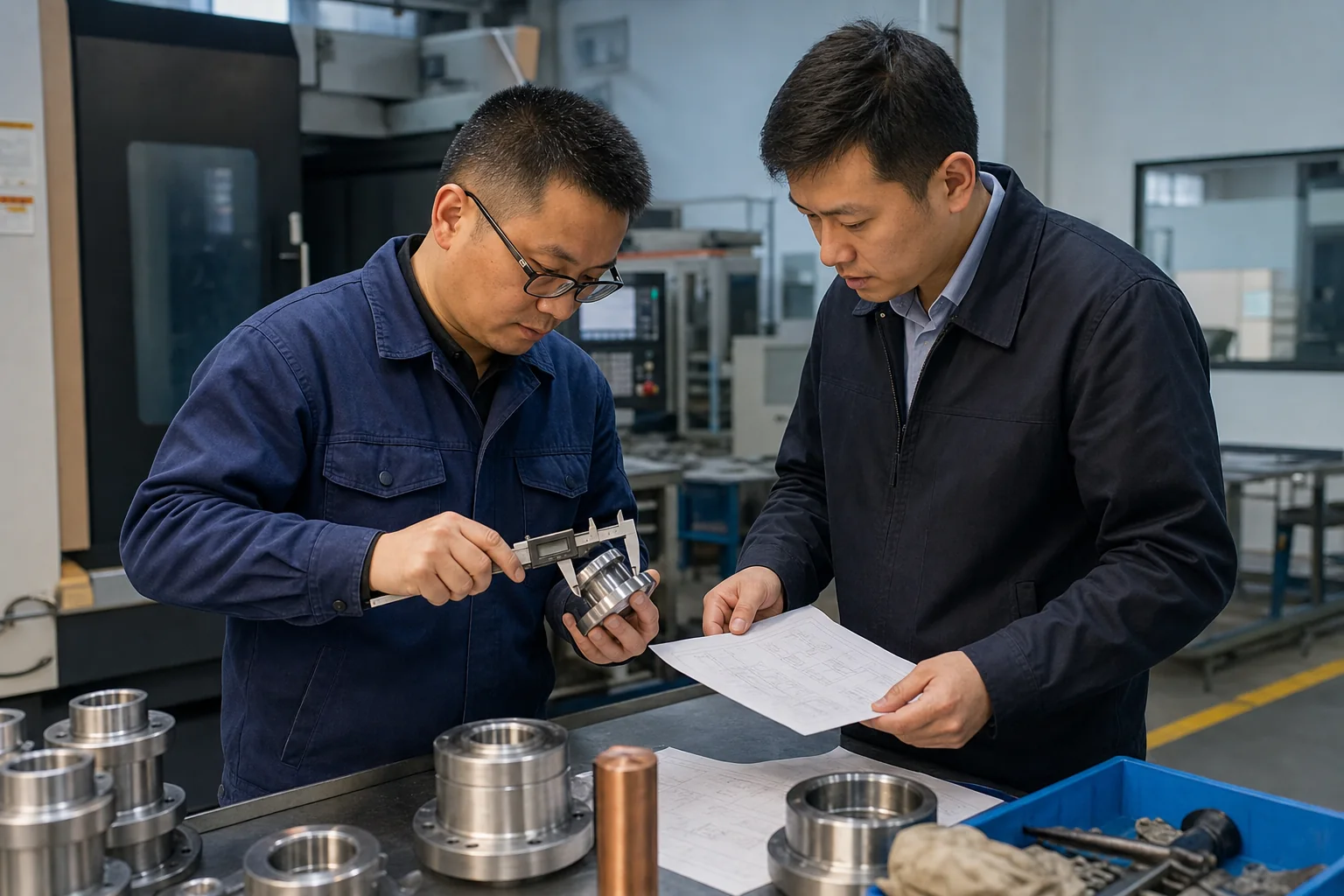
4. Assess production capability, not only product availability
A supplier may be able to produce one good sample without being ready for stable mass production. Review the process steps that influence your product's quality, capacity, and lead time.
Ask which processes are completed in-house and which are outsourced. For outsourced processes, clarify how subcontractors are selected, how incoming work is inspected, and who is responsible when a defect occurs.
For technical products, involve an engineer or quality specialist in the conversation. Sales responsiveness is useful, but it should not replace technical confirmation.
5. Compare the complete quotation
The lowest unit price is not always the lowest total cost. Compare quotations line by line and identify what is included or excluded.
- Unit price at different quantities
- Tooling, mold, setup, testing, and sample charges
- Packaging and labeling costs
- Incoterms and delivery location
- Payment terms and currency
- Sample and production lead times
- Warranty, replacement, or defect-handling terms
A professional quotation should make assumptions visible. A very low price may reflect a different material, tolerance, testing method, packaging standard, or trade term.
6. Use samples to establish a measurable quality standard
Do not approve a sample based only on appearance. Record the specification, material, version, test result, packaging, and any approved deviation. The approved sample should become part of the production reference.
For higher-risk products, use a golden sample and a written inspection checklist. Define which defects are critical, major, or minor and agree on how nonconforming products will be handled.
A sample is most valuable when it creates a shared, measurable definition of acceptable quality.
7. Match the verification level to the order risk
Not every purchase requires a full factory audit, but the level of verification should increase with order value, product complexity, compliance exposure, and the cost of failure.
Depending on the project, verification may include:
- A live factory video call
- A third-party or on-site factory audit
- Pre-production sample approval
- During-production inspection
- Pre-shipment inspection and quantity check
- Independent laboratory testing
For a first order, a smaller controlled production run can reduce risk and provide evidence about quality consistency, communication, and delivery performance.
8. Record the approval decision before increasing order exposure
Close the evaluation with a dated decision record. Identify the supplier and product, link the reviewed evidence, and separate verified findings from assumptions. List each open issue with an owner, a deadline and the evidence required to close it. The buyer should record whether to proceed, proceed after specific conditions are met, or hold.
Use that record to set the next commitment: a sample, a controlled trial order or a production order with defined checks. Keep the approved product specification sheet, sample revision and acceptance criteria together so that later changes remain visible. Recheck the decision when the entity, factory, materials, subcontracting or order size changes.
Supplier approval is only the first control. Before dispatch, connect the agreed inspection result to the actual lot; then use a separate container loading inspection checklist for the visible loading and seal handoff.
If you are relying on a laboratory report, use the narrower test-report and product-match checklist to separate document authenticity, the tested scope and the product revision. Keep any unresolved match in the supplier decision record; a genuine report alone does not establish that the current order or every delivered item meets the required specification.
Warning signs that deserve further checking
- The supplier avoids sharing its legal company name or factory address
- Payment is requested to an unrelated personal or company account
- Technical questions receive confident but unspecific answers
- Certifications cannot be matched to the product, model, or legal entity
- The quotation is much lower than comparable offers without a clear reason
- The supplier refuses reasonable sample, video, audit, or inspection requests
- Specifications change between the quotation, sample, and production agreement
One warning sign does not always mean the supplier is unsuitable. It means the unanswered risk should be resolved before you increase your commitment.
Frequently asked questions
What should a China supplier evaluation include?
At minimum, review the legal entity, payment account, manufacturing role, product-specific capability, quality controls, quotation assumptions, sample evidence, delivery plan, and any certifications or test reports required for the destination market. The depth of the review should increase with the order value and cost of failure.
What do supplier evaluation services in China typically check?
A useful service should define the buying requirement, verify the legal entity and payment path, examine product-specific factory evidence, review quotation and sample assumptions, and recommend an audit or inspection level that matches the order risk. A China factory evaluation should state what was checked, what evidence supports the finding, and what remains unverified.
What should a supplier evaluation report contain?
A supplier evaluation report should identify the company, factory, product and agreed scope; link findings to dated evidence; state what was not verified; list unresolved actions and responsible people; and record the buyer's next decision. It should distinguish verified findings from assumptions.
Is a factory audit always necessary?
No. A lower-risk first order may be screened through company documents, product-specific evidence, samples, a live video walkthrough, and an independent pre-shipment inspection. An on-site or third-party audit becomes more useful when the product is complex, regulated, expensive, difficult to rework, or dependent on stable process control.
For the narrower post-screening decision, use the guide to factory audits and pre-shipment inspections in China to choose the service, define the checklist, understand AQL sampling and act on the report.
How do I evaluate a supplier in China before paying?
Confirm that the legal company, quotation, contract, bank account, invoice, and certifications fit together. Resolve unexplained entity differences, approve a measurable sample, define inspection and defect terms, and match the initial payment exposure to evidence already verified.
Evidence boundaries and official verification sources
This checklist is a buying-decision framework, not a universal supplier score. A company record can help confirm an entity, a management-system certificate can support one part of a process review, and a product certificate can address a defined market requirement. None of those records alone proves that a specific factory, product, production lot or delivery promise is suitable for your order.
- ISO 9001:2015 — requirements for a quality management system; it is not product approval or proof of a particular production lot.
- IAF CertSearch — a global database for checking accredited management-system certificates where records are available.
- U.S. CPSC: Children’s Product Certificate — an example of destination-market product testing and certification duties that supplier screening cannot replace.
Sources checked on 29 August 2026. Requirements vary by product and destination market. Confirm the exact legal, technical, testing and certification scope before placing an order.
A practical decision rule
Do not select a supplier using one strong signal. Look for consistency across company records, technical answers, factory evidence, samples, quotations, communication, and third-party checks.
The right supplier is not simply the one that says yes fastest. It is the one that understands the requirement, communicates trade-offs clearly, provides verifiable evidence, and can repeat the agreed standard during production.
If you need help preparing a sourcing brief, screening suppliers, comparing quotations, or coordinating samples and factory verification in China, send a project inquiry or email me directly.