
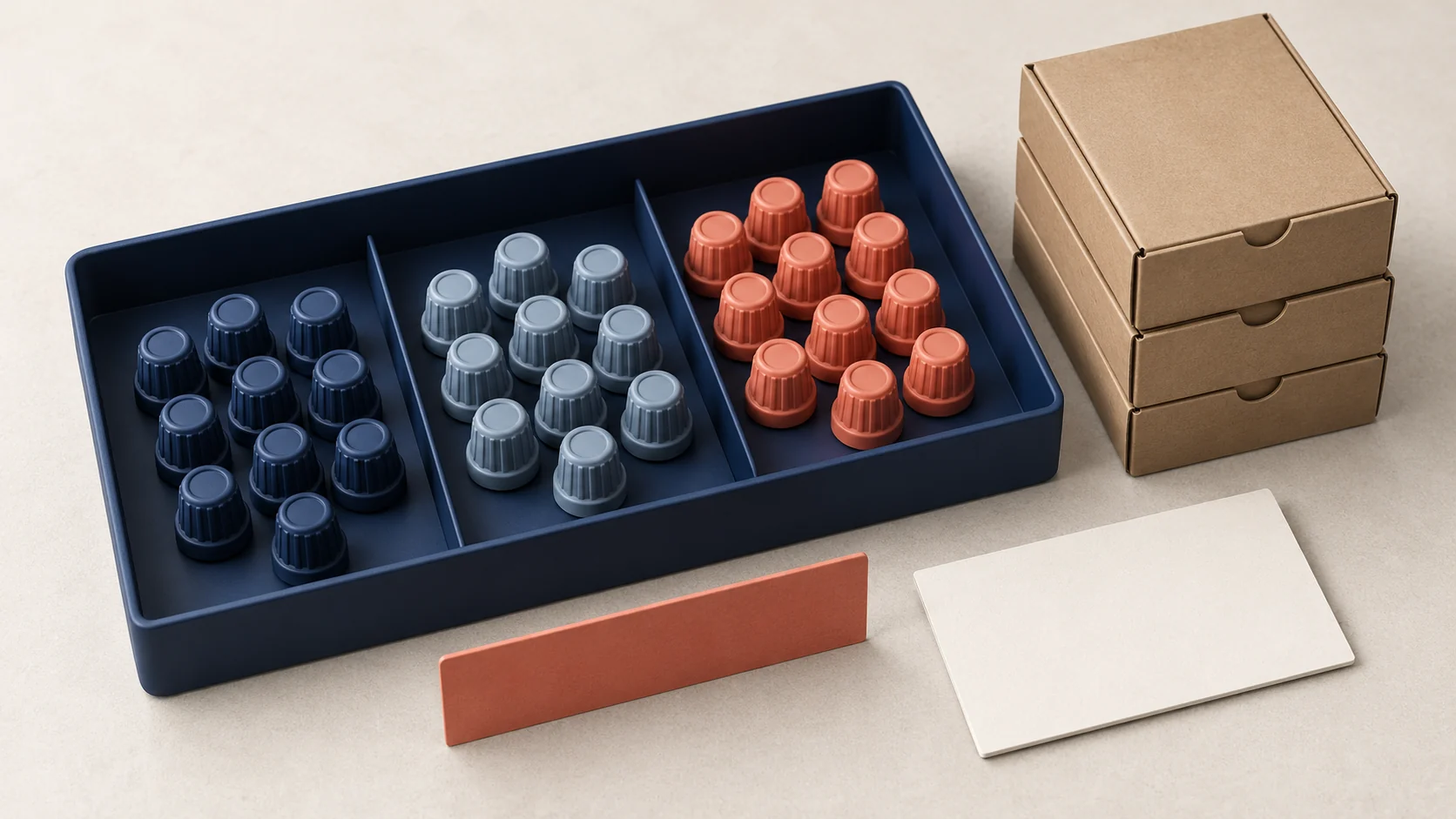
A supplier’s “MOQ 300” is incomplete information until you know what the 300 applies to. It could be an order total, one model, one color or a particular production grouping. Before negotiating a smaller trial order, map the quantity rule to the configuration you actually want to buy.
Confirm the scope before negotiating the number
MOQ means minimum order quantity. This guide is a CZ Overseas operating method for ordinary manufactured goods, not a universal MOQ schedule or a promise that a supplier will accept a reduction. Sample purchases need separate sample-cost terms; a small sample purchase does not establish the conditions for regular production.
1. Ask what the minimum applies to
Send the model, specification revision, color mix, units, packaging and delivery split. Ask the supplier to identify each applicable minimum and explain which items may be combined. Pieces, sets, cartons, kilograms and meters are different units; do not convert between them without a confirmed basis.
| Scope | Question to resolve | Do not assume |
|---|---|---|
| Total order | Which items count toward the total? | Every variant is ready for production |
| Model or style | Can different specifications share a run? | Similar-looking products can be combined |
| Color, material or process | Which grouping and unit define the minimum? | Total volume permits any allocation |
| Packaging | Does a printed box or other custom pack have its own minimum? | Unused packaging and its cost are already allocated |
2. Compare like-for-like trial-order offers
Describe quantities for each model, color or size, not only the total. Have the supplier mark each condition confirmed, unresolved or not applicable. An unanswered material or packaging question is not a zero minimum.
A stock item in standard colors and a newly customized item with printed packaging are different offers. Align the specification, then compare quantity and price conditions using the quotation guide. A price tier describes pricing at a stated quantity; it does not by itself prove that a smaller order is prohibited. Permission to place a smaller order also does not preserve the larger-order unit price.
3. Test the allocation as well as the total
Fictional quantity example: the agreed order minimum is 300 pieces, with a minimum of 100 pieces for each of three colors. Every quantity is in pieces. No other minimum has been confirmed for this example. Total Q is the sum of the color quantities, and each color must separately meet its stated minimum.
100 + 100 + 100 = 300 pieces meets both stated quantity tests. So does the total in 200 + 50 + 50 = 300 pieces, but that allocation fails the 100-piece minimum for the second and third colors. These are whole-piece calculations with no money or rounding, not a factory benchmark.
Passing these tests confirms only the quantity conditions in the example. It does not approve an order, price, product or compliance status. If material or packaging conditions are unresolved, keep those questions open before treating the configuration as production-ready.
4. Make a trial-order exception specific
If your proposed quantity is below the regular minimum, discuss realistic configuration options: fewer colors, a confirmed standard material, standard packaging or a different quantity. Availability depends on this supplier’s current production and purchasing conditions. A hoped-for future large order is not a substitute for approval of the present one.
Ask the authorised person to identify the product, configuration, quantity, price, extra charges and delivery conditions covered by an exception. Record whether it applies only once and which changes require a new offer. Clarify responsibility for surplus materials or packaging rather than assuming they are free or reserved for your next order. Keep an unapproved exception pending.
5. Carry the answer into the actual order
The buying owner prepares a manual quantity record from the current specification, mix, supplier offer and correspondence. Production and material or packaging owners confirm the relevant conditions; an authorised person approves exceptions. The useful output is a versioned record containing:
- Model/revision, variant quantities and units;
- Total and individual minimums, mixing rules and evidence;
- Price tiers, one-time costs and unresolved material/packaging conditions;
- Exception scope, approving contact, date and validity conditions;
- Open-question owner and the next review trigger.
This page does not submit an order or collect your information. Reconcile the record with the purchase-order review. A change to color, material, packing, delivery split or quotation validity can reopen the affected quantity question. Retain the old agreement and the reason for any change.
Evidence and limits
Sources checked 16 October 2026: an Alibaba.com seller article distinguishes product, color and style minimums in custom apparel. That illustrates why scope matters; it does not establish minimums across China suppliers. We have not adopted its industry quantities, prices or performance figures. ITA’s pro forma invoice guidance supports recording quantity, unit prices and commercial terms, not a particular MOQ.
The checks and arithmetic here are our method. Actual minimums, mixing permission, price and lead time remain transaction-specific. Overseas buyers can use the record to compare the same configuration and avoid confusing a sufficient total with a feasible color or packaging mix.
Frequently asked questions
Does MOQ always mean a minimum per color?
No. Ask whether it applies per order, model, color or another production grouping, with its unit and mixing conditions.
Does meeting the total MOQ make the order ready?
Not by itself. Check each applicable subminimum, packaging and material conditions, then reconcile the current price, specification and delivery terms.
Does a small sample purchase establish a low production MOQ?
No. Confirm samples, trial orders and regular production separately. A one-off exception does not automatically carry forward.