
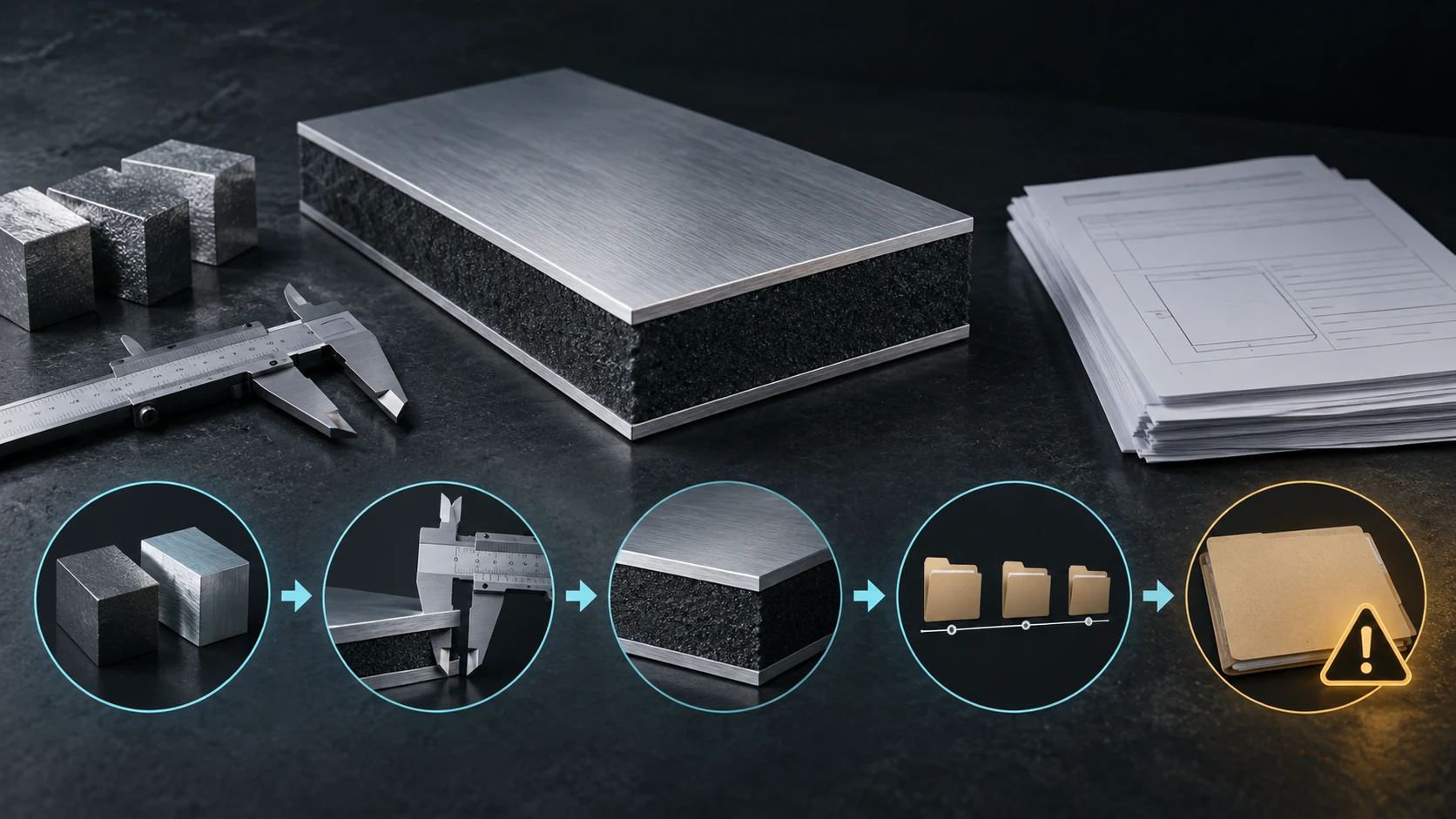
On 2 October 2026, the U.S. Department of Commerce self-initiated a circumvention inquiry into specified aluminum composite panels made in China by Shanghai Alumetal Decorative Material Co. and exported to the United States. The question is whether a minor alteration circumvents the antidumping and countervailing duty orders on common alloy aluminum sheet from China. Initiation is not an affirmative determination, and the notice does not cover every aluminum composite panel from China.
Start with four evidence sets
Product, parties, entries and the live record
Keep actual construction evidence, producer and exporter identity, entry and liquidation status, and the current official documents together. Label any point awaiting importer or professional review as pending.
1. Record the exact procedural stage
Capture case numbers A-570-073 and C-570-074, the publication and effective date, and the current stage. The notice initiates an inquiry. It is not an affirmative preliminary determination, final determination or new rate for every product. Use that same wording in supplier, broker and buyer communications.
2. Test the actual product against the written description
The inquiry describes an LDPE core permanently bonded between two aluminum sheets, each no more than 0.2 mm thick, with a total panel thickness greater than 0.2 mm and no more than 6.3 mm, made from 1100 alloy. Obtain the bill of materials, cross-section photographs, measurement method, equipment record and lot results. A commercial name such as “ACP” cannot replace this evidence.
3. Keep scope and circumvention questions separate
Commerce states that the self-initiation draws on information from an earlier scope inquiry and asks whether the specified panels, if not directly covered by scope, constitute a minor alteration. Use the U.S. AD/CVD scope-check guide to record the written scope and actual merchandise, then track the circumvention question separately.
4. Confirm the producer, exporter and importer chain
The notice is producer-specific: it identifies panels produced by Alumetal in China. Record the actual producer, exporter, invoicing entity, importer of record and relevant affiliates for each purchase and entry. Similar names, resale through a trading company or a different payment beneficiary do not establish identity.
5. Build an entry and liquidation-status register
For each potentially relevant entry, the importer should record the entry number, entry date, merchandise, quantity, declarant and liquidation status. The notice says Commerce will direct CBP to continue suspension for relevant unliquidated entries already suspended and apply the rate that would apply if the product were found to be circumventing. That does not support saying every related entry immediately received one new cash-deposit requirement.
6. Preserve contemporaneous specification and commercial changes
Retain inquiries, quotations, drawings, samples, purchase records, production versions, invoices and shipping records, especially any changes to aluminum-skin thickness, alloy, core and total thickness. Commerce may consider physical characteristics, ultimate-user expectations, use, marketing channels and modification cost relative to imported value. Records created during the transaction are stronger than a reconstruction after a dispute.
7. Set triggers for later determinations and CBP instructions
If Commerce later reaches an affirmative preliminary or final determination, it may direct suspension and cash deposits for additional unliquidated entries. The notice also describes authority that may reach pre-initiation entries, but not entries before 4 November 2021. Application to a transaction still depends on the later determination and CBP instructions. Set review triggers for a preliminary determination, final determination, CBP message or importer notice.
8. Assign each decision to the responsible party
The supplier should provide accurate product and transaction evidence. The U.S. importer should confirm entries, liquidation status and current filing treatment. Its customs broker or trade counsel should interpret the live instructions and response requirements. A commercial decision should identify the source date, open question, responsible reviewer and next review point.
An eight-field evidence card
- Product, model, BOM and production lot.
- Aluminum-skin thickness, total thickness, alloy and core.
- Producer, exporter, invoice entity and importer of record.
- Entry number, entry date and liquidation status.
- Current official record, CBP instruction and source date.
- Specification and commercial-version history.
- Pending decision, reviewer and deadline.
- Next trigger: preliminary determination, final determination, CBP message or importer notice.
Sources and limits
Checked 4 October 2026. The factual event and product description come from Commerce’s Federal Register notice 2026-20256; the public initiation memorandum is available through ACCESS Federal Register Notices. Unless the inquiry is rescinded in whole or part, Commerce says it intends to issue a final determination within 300 days of publication. This guide is an evidence-control framework, not a scope ruling, duty opinion, entry instruction or legal advice.
Frequently asked questions
Does initiation mean Commerce already found circumvention?
No. An affirmative preliminary or final determination would be a later procedural step.
Can an HTS code decide whether an entry is covered?
No. Review the written description, actual construction, company chain and current case record together.
Did every related entry receive a new cash deposit immediately?
That is too broad. Treatment depends on the entry status, later determinations and CBP instructions.
Need to structure an order review?
Use the export toolkit to organize product, entity and entry fields, then contact Chris about separating public-source research from sensitive transaction evidence. Do not send customer, customs or payment records through a public message.